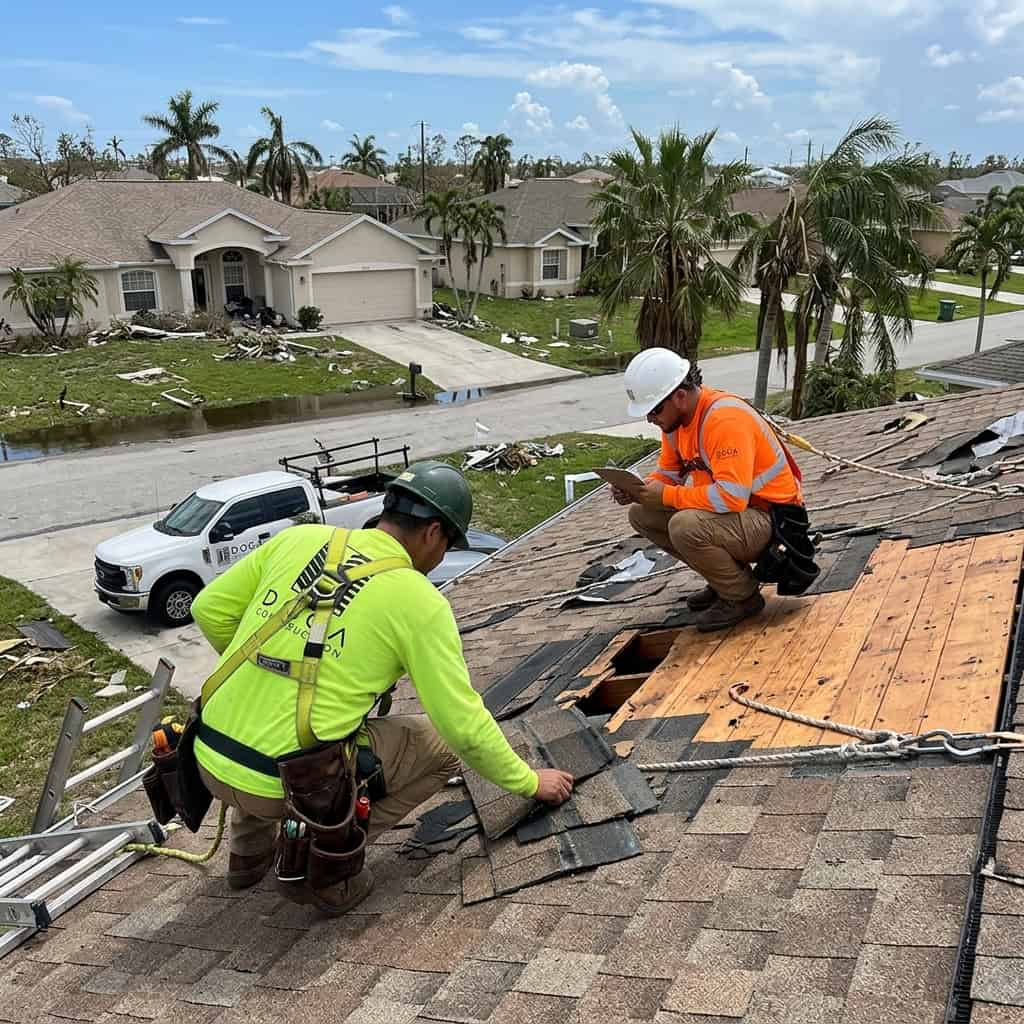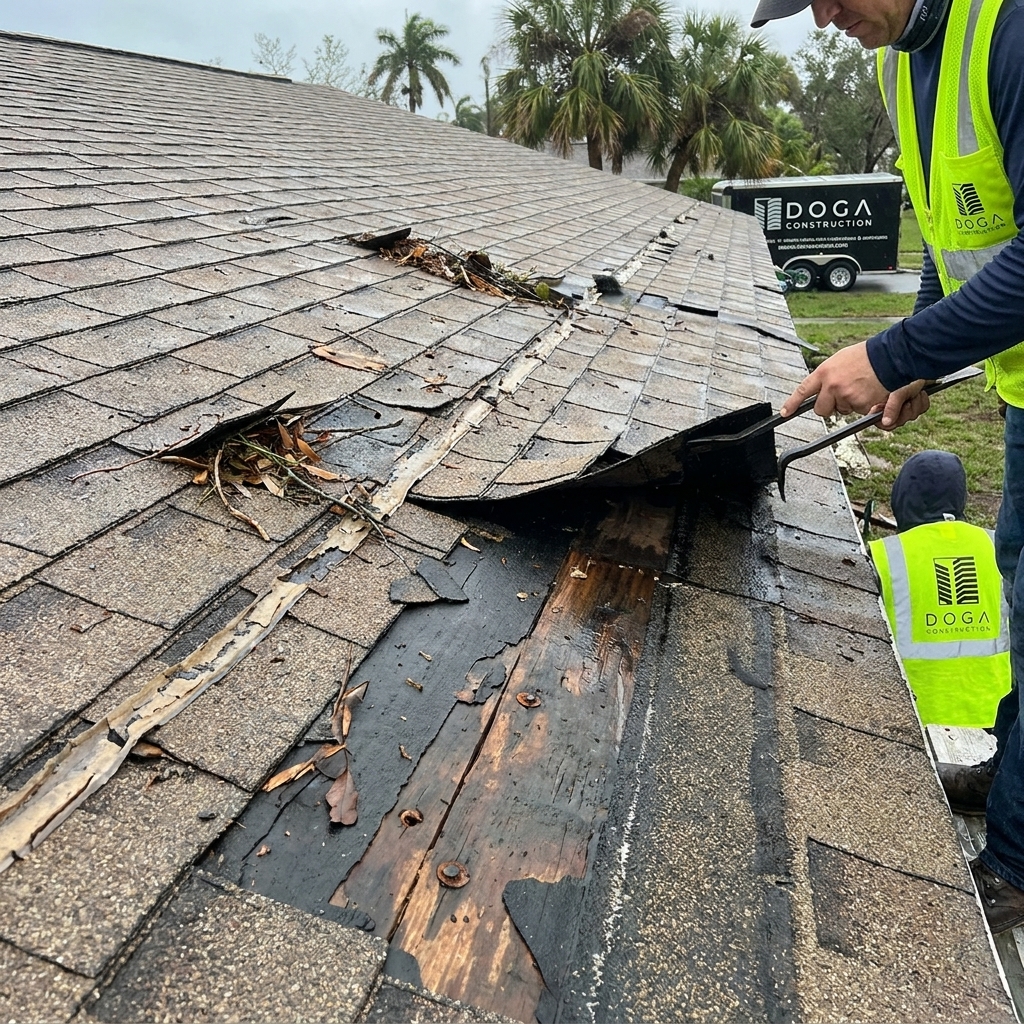

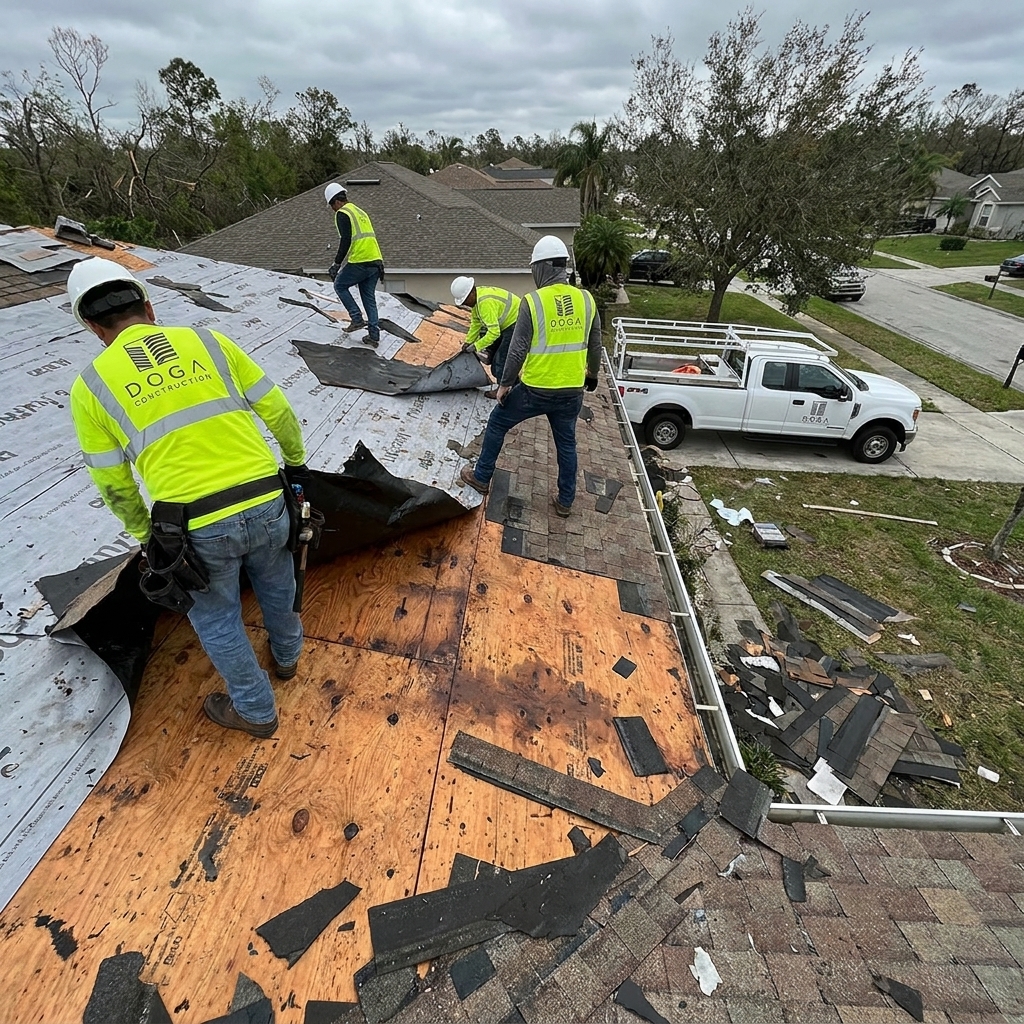
Following a severe storm, a roof may appear pristine from the curb while harboring extensive moisture damage underneath. Shingles represent only the outer barrier; the critical protection relies on the underlayment and structural decking underneath.
How Water Infiltrates the Underlayment and Decking
Hurricane-force wind drives rain horizontally into gaps no wider than a coin edge:
- Compromised Underlayment: The waterproof barrier beneath the shingles ages alongside the roof. At 15 years old, underlayment often suffers from thermal brittleness, tearing around fastener penetrations, and diminished waterproofing capabilities.
- Decking Saturation: Once moisture breaches the underlayment, plywood or OSB roof decking absorbs the water. This causes wood swelling, structural weakening, and hidden mold propagation long before ceiling drywall softens.
- Delayed Leaks: Water travels along rafters, conduits, and trusses before dripping down. A ceiling stain appearing two weeks after a storm often originates feet away from the initial roof penetration.
Wind Uplift and Vulnerable Zones
High-velocity winds create aerodynamic uplift, exerting suction forces that pull materials away from the deck. The most vulnerable areas include:
- Roof edges, eaves, and corners.
- Ridge caps and slope transitions.
- Metal flashings at chimney bases, dormers, and side walls.
- Attic vent flashings and pipe boots.
- Misaligned gutters that back up water underneath roof edges.
What Insurance Adjusters Look For
When assessing a claim on a 15-year-old roof, adjusters closely differentiate between direct storm-created openings and pre-existing wear and tear. Prompt post-storm inspections and thorough documentation are critical for establishing clear proof of loss.
In Part 3, we will break down the decision framework: when to repair versus when to completely replace a 15-year-old roof in Florida.