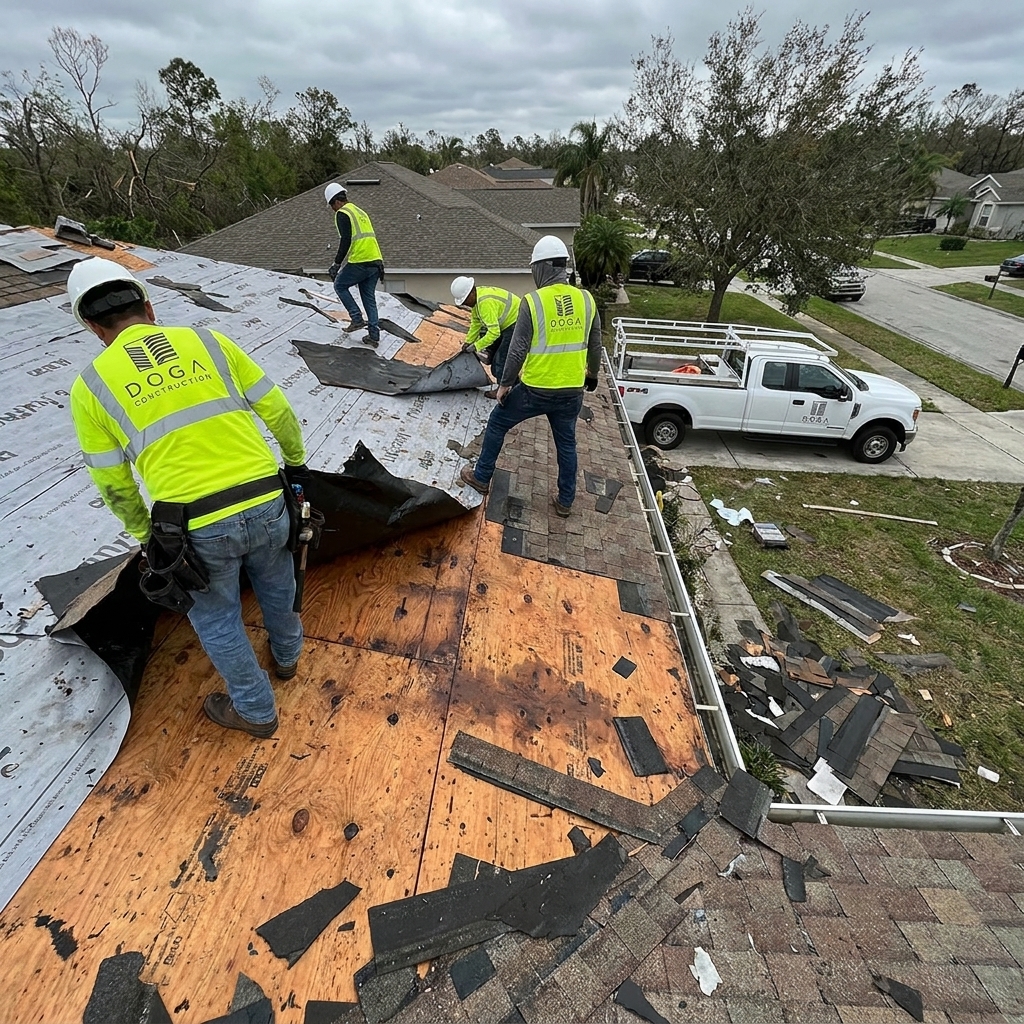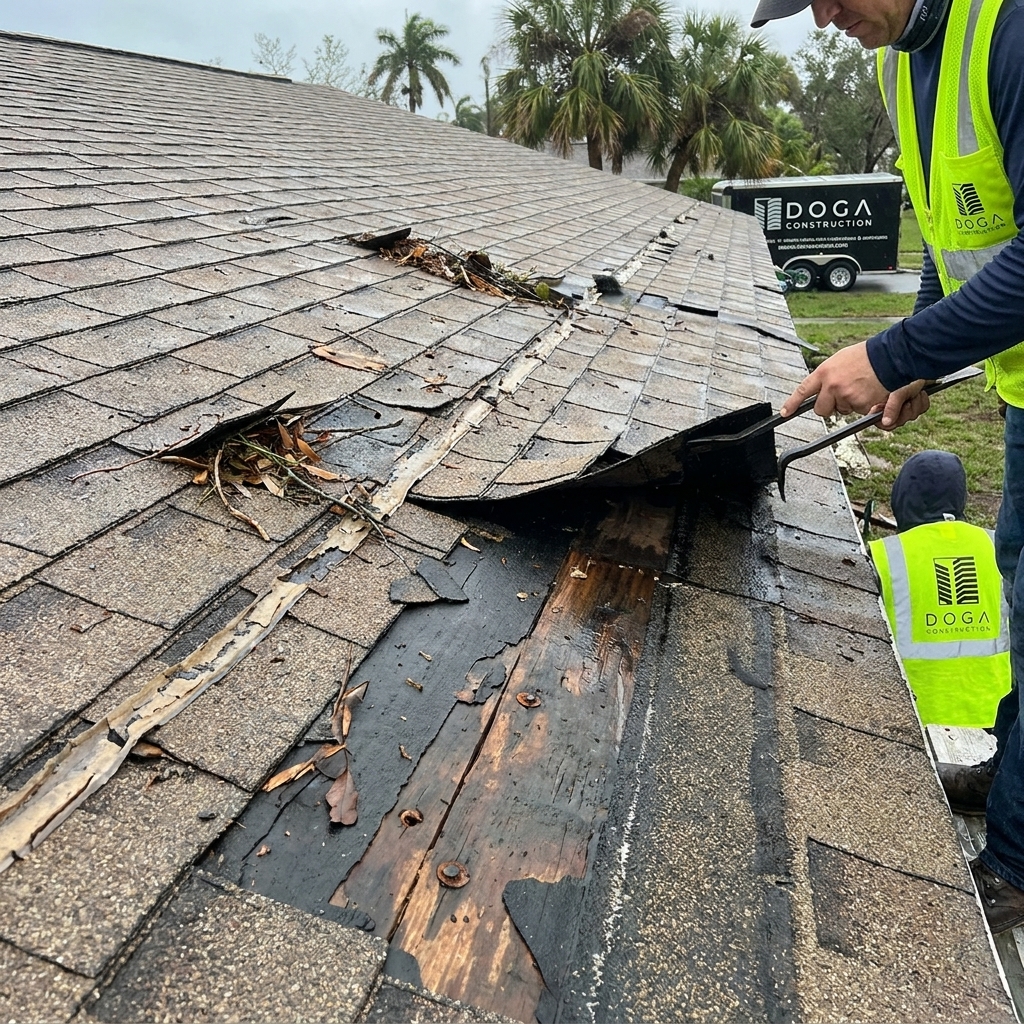

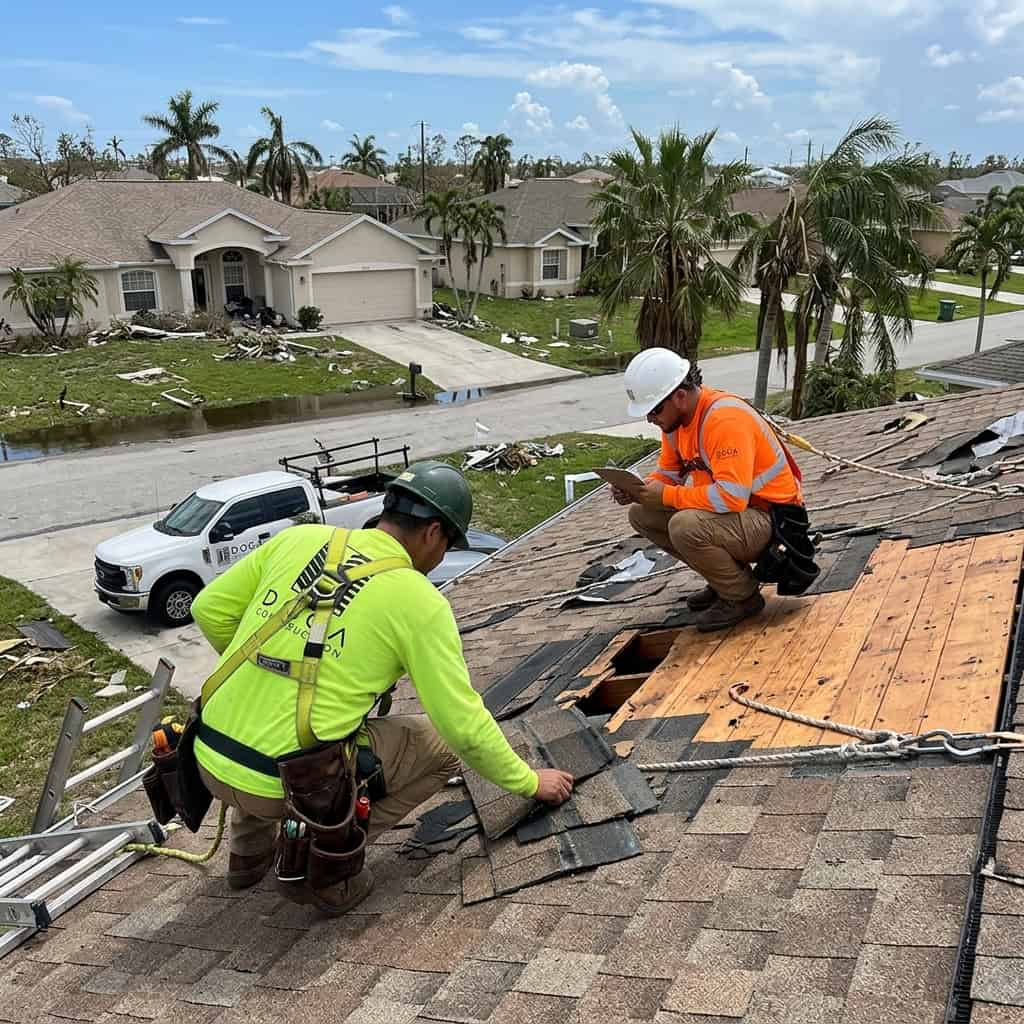
In the previous posts, we saw that a 15-year-old roof no longer reacts like a new one and that water can hide beneath the shingles, in the underlayment, and inside the decking. Now comes the question every homeowner really cares about: should you repair or replace your roof after a hurricane?
The answer depends on the extent of the damage and the condition of what remains. Therefore, instead of deciding by gut feeling or price alone, it’s best to evaluate every component of the roof, following the Florida Building Code requirements for high-wind zones.
When Is a Repair Enough, and When Should You Replace?
A targeted repair is usually enough when:
- Damage is limited: it’s confined to one small, isolated area.
- The decking is sound: the plywood is dry and structurally firm.
- The underlayment is intact: it’s still flexible and continuous.
- There’s little repair history: few or no previous fixes.
A full replacement is usually the better investment when:
- Multiple roof planes are affected.
- The decking is compromised: saturated, warped, or showing mold.
- The underlayment is failing: brittle or torn in several areas.
- You see repeated patching and recurring leaks.
- Cumulative repair costs approach the price of a new roof, without enough remaining service life to justify them.
Warning Signs You Should Never Ignore
- Exterior: lifted, missing, or creased shingles; heavy granule buildup in the gutters; loosened flashing; and uneven eaves.
- Interior: yellowish ceiling stains, bubbling paint, a persistent musty smell in the attic, and intermittent leaks during later rain.
However, no leaks doesn’t mean no damage. As we saw in Part 2, moisture can sit in the insulation or the decking for weeks before it ever reaches the ceiling.
How to Protect Your Roof Before the Next Hurricane
- Schedule professional inspections, ideally before and after every hurricane season.
- Replace damaged shingles immediately and keep gutters and downspouts clear.
- Check the seals around chimneys, vents, and other penetrations.
- Trim nearby branches that could strike the roof in high winds.
Frequently Asked Questions
Does a 15-year-old roof need to be replaced automatically after a hurricane?
No. It needs a professional evaluation to confirm whether it’s still structurally sound.
Can a roof have serious damage without active leaks?
Yes. Moisture can build up inside the insulation or decking long before it shows up indoors.
Which roofing material handles Florida weather best?
Metal roofs and high-impact-rated shingles, installed to Florida Building Code standards, deliver superior performance.
If your roof is around 15 years old and was recently exposed to a storm, DOGA Construction inspects every component to uncover visible and hidden problems. Request a professional inspection and get a clear diagnosis so you can decide whether to repair or renew your investment.
With this third post, we close our series on what happens to a 15-year-old roof after a hurricane.